How Behavioral Health Dashboards Link Teams to Outcomes
Behavioral Health Dashboards and Outcomes Analytics | Care Predictor
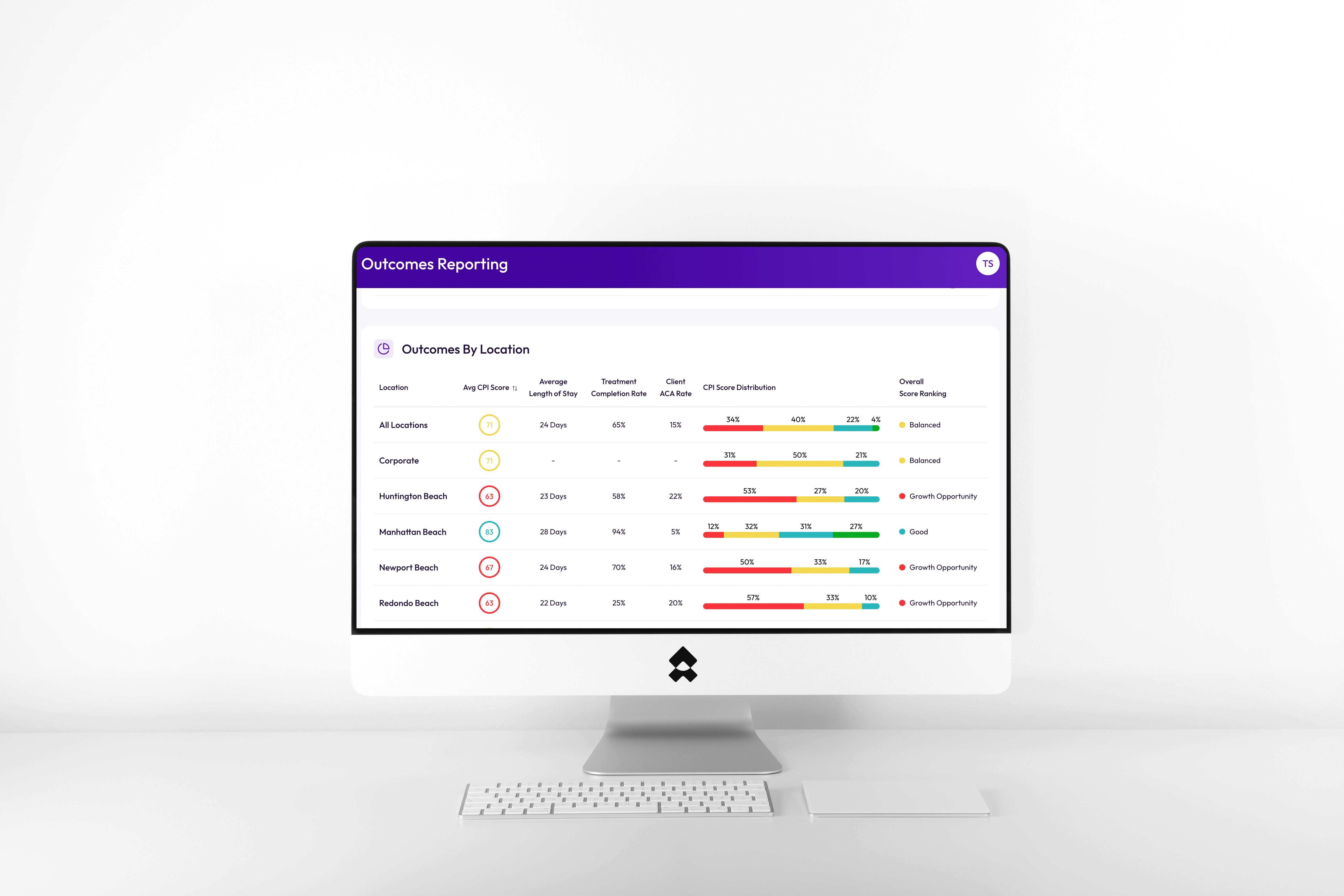
Learn how behavioral health executive dashboards connect clinician competency, staff development, patient outcomes measurement, and treatment completion rates improvement.
Behavioral health dashboards link teams to outcomes by connecting patient outcomes measurement with the staff, team, and development factors that may influence care performance. For executives and clinical leaders, the goal is not only to track treatment completion rates, AMA, engagement, or retention after they happen. The stronger use case is understanding whether those outcomes may be connected to clinician competency, relational strengths, role fit, team consistency, and staff development needs.
Care Predictor fits this category by helping behavioral health organizations connect staff insight, system-of-record data, and outcome patterns so leaders can better understand the people-side drivers behind care performance.
Many behavioral health leaders can see that completion rates vary by program, site, team, or clinician. What is harder to see is whether that variation is connected to patient mix, staffing consistency, therapist fit, relational strengths, supervision needs, or team dynamics.
That is where behavioral health dashboards need to evolve. A dashboard that only reports outcomes is useful. A dashboard that connects outcomes to people-side performance drivers gives leaders something more valuable: a clearer path from measurement to action.
For behavioral health executives and clinical operations leaders, the best dashboards do not simply answer, “What happened?” They help answer, “What may be driving this, and what should we do next?”
What should a behavioral health executive dashboard show?
A behavioral health executive dashboard should show more than lagging outcome metrics. Completion, AMA, length of stay, engagement, and retention matter, but they are only one layer of the story.
The more useful dashboard connects outcomes to the people and team factors that may be shaping those outcomes. That includes staff strengths, role fit, therapist/patient fit, team consistency, and development opportunities.
Dashboard Layer | What It Shows | Why It Matters |
|---|---|---|
Outcome metrics | Completion, AMA, engagement, retention, length of stay, patient satisfaction | Shows what happened |
Workforce and team metrics | Staff strengths, role fit, competency patterns, therapist fit, team consistency, development needs | Helps explain why outcomes may vary |
Action layer | Supervision priorities, staff development plans, staffing decisions, therapist/patient matching insight | Helps leaders decide what to do next |
The strongest behavioral health executive dashboards connect these layers instead of treating them as separate reports. That connection is what turns a dashboard from a reporting tool into a leadership tool.
Why outcome dashboards alone are not enough
Outcome dashboards are important because they show leaders where performance is strong or slipping. But outcome data is usually lagging data. It often shows the pattern after the patient, clinician, team, or program has already felt the impact.
A clinical leader may know one program has higher premature discharge rates than another. A COO may know completion is stronger at one site than another. A CEO may see that census stability is affected by variation in engagement or treatment completion.
What those leaders may not be able to see from outcome reporting alone is whether the pattern is tied to therapist fit, staff consistency, patient engagement, supervision needs, or team-level development gaps.
That is the gap behavioral health outcomes analytics should help close. The dashboard should not only organize data. It should help leaders interpret what the data may mean.
How clinician competency assessments connect to patient outcomes
Clinician performance and competency assessment should not be used to rank staff or reduce a clinician’s value to a number. In behavioral health, the more useful question is whether staff strengths, relational skills, role fit, and development needs are connected to patient engagement, treatment completion, AMA risk, and care consistency.
A behavioral health clinical assessment and outcomes analytics platform should help leaders understand these patterns with enough context to support supervision, development, and better-informed team decisions.
This matters because behavioral health outcomes are not shaped by program design alone. The people delivering care, building trust, managing conflict, supporting engagement, and sustaining treatment participation can all influence the patient experience.
When clinician assessment data is connected to patient outcomes measurement, leaders can begin to ask better questions:
Are completion rates stronger with certain staff strengths or team patterns?
Are AMA trends connected to engagement, therapist fit, or consistency of care?
Are some clinicians or teams better suited for certain patient needs?
Where would supervision or development support have the greatest impact?
Which staff strengths should be protected, developed, and shared across the team?
The point is not to blame clinicians for outcomes. The point is to give leaders a better way to support the people whose work shapes care delivery every day.
What metrics should behavioral health leaders connect?
The value of a dashboard depends on whether the right metrics are connected. A dashboard can have dozens of charts and still fail to explain what leaders need to understand.
For behavioral health executives, clinical leaders, and operations teams, the most useful dashboards connect four types of information: outcome metrics, engagement metrics, workforce metrics, and development metrics. Each category answers a different leadership question.
Outcome metrics such as treatment completion rates, AMA rates, length of stay, and successful discharge patterns show where care performance is strong or slipping.
Engagement metrics such as patient engagement trends, patient satisfaction, and patient experience data help leaders understand how patients are responding to care.
Workforce metrics such as staff retention, therapist/patient fit, site-to-site variation, and team-to-team variation help leaders see where people-side patterns may be affecting consistency.
Development metrics such as staff strengths, clinician competency or CPI-related patterns, and supervision priorities help leaders understand where support and development may have the greatest impact.
The key is not collecting every possible metric. The key is connecting the right metrics so leaders can see where outcomes, staff development, and operational performance may be influencing one another.
For example, a completion rate report can show whether more patients are finishing treatment. But when that report is connected to staff strengths, role fit, engagement patterns, and team consistency, leaders get a clearer view of what may be contributing to that result.
How data should flow from systems of record into leadership action
Most behavioral health organizations already have important data inside their systems of record. EMRs, CRMs, RCMs, HRIS platforms, and related systems help leaders document care, manage operations, track billing activity, and understand what happened.
The problem is that systems of record may not fully explain why outcomes vary. A stronger dashboard connects system-of-record data with staff insight and outcome trends so leaders can move from reporting to action.
Systems of record capture what happened across clinical, operational, workforce, and financial workflows.
Staff and pre-hire surveys add people-side context, including relational strengths, role fit, team dynamics, and development opportunities.
Outcome data shows performance patterns across completion, AMA, engagement, retention, and care consistency.
Executive and clinical dashboards connect the data by role, team, program, or site.
Leaders use those patterns to guide supervision, staff development, therapist/patient matching, or operational support.
Follow-up measurement shows whether the same outcome patterns improve, decline, or stay flat over time.
This is where behavioral health dashboards become more useful. The dashboard does not replace leadership judgment. It gives leaders a clearer way to decide where attention, support, and development may be needed.
Where Care Predictor fits
Care Predictor is a behavioral health workforce performance and outcomes analytics platform for treatment organizations. It helps leaders identify people-side drivers of completion, AMA, engagement, retention, and staff development.
Care Predictor uses staff surveys, pre-hire surveys, and system-of-record data to help leaders see how staff strengths, role fit, team dynamics, and outcome patterns may be connected. That gives executives and clinical leaders a clearer way to move from outcome reporting to staff development action.
Care Predictor is not an EMR, CRM, RCM, employee monitoring tool, or generic personality test. It works alongside systems of record to help behavioral health leaders understand the people-side patterns that may explain why outcomes vary and where development can have the greatest impact.
What should leaders look for in a behavioral health clinical assessment and outcomes analytics platform?
A behavioral health clinical assessment and outcomes analytics platform should help leaders connect workforce insight to patient outcomes measurement. It should also give clinical and operational teams a practical way to use that information.
The best tools do not stop at measurement. They help leaders decide what to do next. When evaluating a platform, leaders should look for four things: behavioral health specificity, connected data, development-focused insights, and role-specific visibility.
Behavioral health specificity: The platform should be built for behavioral health treatment organizations, not adapted from a generic workforce or analytics tool.
Connected data: It should connect staff insight to patient outcomes measurement, including treatment completion, AMA, engagement, and care consistency patterns.
Systems-of-record compatibility: It should work alongside EMRs and other systems of record so leaders can get more value from the data they already collect.
Team and site visibility: It should show patterns by role, team, program, or site so leaders can understand where outcomes vary and where support may be needed.
Development-focused insight: It should support staff development rather than staff ranking, helping leaders identify strengths, development opportunities, and supervision priorities.
Clinical team development workflows: It should help leaders turn insight into practical support for clinical teams, not leave them with another report to interpret on their own.
Role-specific dashboards: It should give executives, clinical leaders, and operations teams views that match the decisions they need to make.
Evidence-aware reporting: It should make evidence, claim limitations, and outcome associations clear instead of overstating what any score or dashboard can prove.
This is an important distinction. A dashboard that only displays numbers can leave leaders with more questions than answers. A behavioral health outcomes analytics platform should help leaders connect those numbers to the human patterns behind care delivery.
The right platform should make it easier to see what is happening, understand what may be influencing it, and decide where leadership action can have the greatest impact.
Evidence matters when dashboards connect teams to outcomes
When a dashboard connects clinician competency, staff development, and patient outcomes, the claims behind that connection need to be handled carefully. Behavioral health leaders should look for evidence that shows how staff patterns relate to measurable outcomes, while avoiding tools that overstate what a score or dashboard can prove on its own.
In a Journal of Behavioral Health and Psychology study across five behavioral health organizations, higher Care Predictor Index scores were associated with higher treatment completion rates and lower AMA rates. The study was observational, which means the finding should be described as an association, not as proof that CPI alone causes better outcomes.
That distinction matters. The strongest dashboards and analytics platforms should help leaders see meaningful patterns, but they should not replace clinical judgment, supervision, or operational leadership.
Care Predictor’s value is in helping leaders connect staff insight to outcome patterns so they can make better-informed decisions about development, support, and care consistency.
Common mistakes when evaluating behavioral health dashboards
Mistake 1: Treating the dashboard as the solution
A dashboard does not improve outcomes by itself. It becomes useful when leaders can turn the insight into supervision, staff development, therapist/patient matching, or operational action.
Mistake 2: Looking only at lagging outcome metrics
Completion and AMA matter, but they often show up after the problem has already affected care and operations. Leaders need a way to connect those outcomes to the people-side factors that may have shaped them.
Mistake 3: Using assessment data punitively
Clinician assessment should support development, not ranking or punishment. When staff believe a tool is designed to judge them instead of support them, adoption and trust can suffer.
Mistake 4: Separating team data from outcome data
Staff insight is more useful when it is connected to engagement, completion, AMA, retention, and care consistency. Without that connection, leaders may see workforce data and outcome data as separate issues when they may be related.
Mistake 5: Choosing generic tools that do not understand behavioral health
Behavioral health organizations need dashboards that understand clinical teams, therapist fit, treatment engagement, AMA, completion, and care consistency. A generic workforce or analytics tool may organize information, but it may not explain the behavioral health context behind the numbers.
The better question: what can leaders do with the data?
A behavioral health executive dashboard should help leaders make better decisions. That means the dashboard should connect measurement to action.
When completion rates fall, leaders need to know where to look. When AMA rises, leaders need to understand whether the pattern may be connected to engagement, therapist fit, staffing consistency, or development needs. When teams vary across sites, leaders need to see whether the variation is operational, clinical, people-side, or some combination of all three.
That is the practical value of linking teams to outcomes. It gives leaders a clearer way to support staff, strengthen care consistency, and improve the conditions that help patients stay engaged in treatment.
FAQ
What is a behavioral health executive dashboard?
A behavioral health executive dashboard is a leadership view that helps treatment organizations track performance across outcomes, operations, workforce, and financial measures. The most useful dashboards connect what happened, such as completion or AMA, with possible people-side drivers such as staff consistency, therapist fit, and development needs.
How can dashboards help improve treatment completion rates?
Dashboards can support treatment completion rates improvement by helping leaders identify patterns connected to completion, such as engagement trends, staff consistency, therapist/patient fit, and clinical team development needs. The dashboard does not improve completion by itself. It helps leaders see where action may be needed.
What metrics should behavioral health leaders track?
Behavioral health leaders should track completion rates, AMA rates, patient engagement, length of stay, staff retention, team consistency, therapist fit, and staff development patterns. The strongest dashboards connect these metrics instead of showing them in isolation.
How do clinician competency assessments connect to patient outcomes?
Clinician competency assessments connect to patient outcomes when they are paired with outcome data such as completion, AMA, engagement, and retention. This allows leaders to look for patterns between staff strengths, role fit, relational skill, and care performance.
Is Care Predictor just a dashboard?
No. Care Predictor includes role-specific dashboards, but it is broader than a dashboard. It is a behavioral health workforce performance and outcomes analytics platform that connects staff surveys, pre-hire surveys, and system-of-record data to help leaders understand people-side performance drivers.
Does Care Predictor replace an EMR?
No. Care Predictor does not replace an EMR, CRM, RCM, HRIS, or other system of record. It works alongside those systems to help leaders understand people-side patterns that system-of-record reporting may not explain on its own.
What tools help behavioral health organizations develop stronger clinical teams?
Clinical team development tools should help leaders identify staff strengths, role fit, relational patterns, and development opportunities. Care Predictor supports this work by connecting staff insight to outcomes such as engagement, completion, AMA, retention, and care consistency.
Connect teams, outcomes, and development action
Want to see how Care Predictor connects staff insight to completion, AMA, and workforce performance? Connect with us to review the Care Predictor research linking CPI scores with treatment completion and AMA outcomes.