How Behavioral Health Dashboards Link Teams to Outcomes
Learn how behavioral health executive dashboards connect clinician competency, staff development, patient outcomes measurement, and treatment completion rates improvement.
Learn how behavioral health executive dashboards connect clinician competency, staff development, patient outcomes measurement, and treatment completion rates improvement.
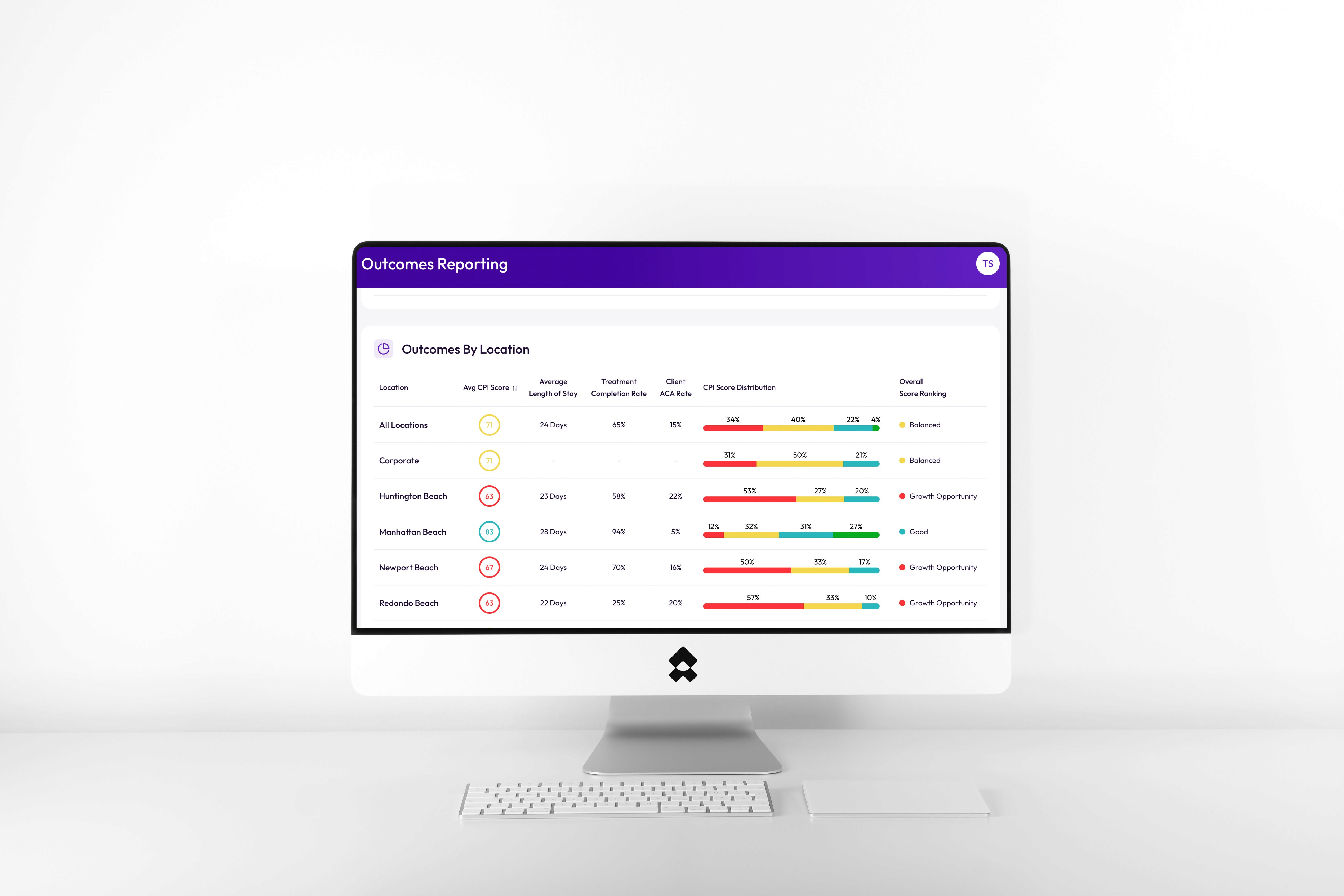
Behavioral health dashboards link teams to outcomes by connecting patient outcomes measurement with the staff, team, and development factors that may influence care performance. For executives and clinical leaders, the goal is not only to track treatment completion rates, AMA, engagement, or retention after they happen. The stronger use case is understanding whether those outcomes may be connected to clinician competency, relational strengths, role fit, team consistency, and staff development needs.
Care Predictor fits this category by helping behavioral health organizations connect staff insight, system-of-record data, and outcome patterns so leaders can better understand the people-side drivers behind care performance.
Many behavioral health leaders can see that completion rates vary by program, site, team, or clinician. What is harder to see is whether that variation is connected to patient mix, staffing consistency, therapist fit, relational strengths, supervision needs, or team dynamics.
That is where behavioral health dashboards need to evolve. A dashboard that only reports outcomes is useful. A dashboard that connects outcomes to people-side performance drivers gives leaders something more valuable: a clearer path from measurement to action.
For behavioral health executives and clinical operations leaders, the best dashboards do not simply answer, "What happened?" They help answer, "What may be driving this, and what should we do next?"
What should a behavioral health executive dashboard show?
| Dashboard Layer | What It Shows | Why It Matters |
| --- | --- | --- |
| Outcome metrics | Completion, AMA, engagement, retention, length of stay, patient satisfaction | Shows what happened |
| Workforce and team metrics | Staff strengths, role fit, competency patterns, therapist fit, team consistency, development needs | Helps explain why outcomes may vary |
| Action layer | Supervision priorities, staff development plans, staffing decisions, therapist/patient matching insight | Helps leaders decide what to do next |
Why outcome dashboards alone are not enough
Outcome dashboards are important because they show leaders where performance is strong or slipping. But outcome data is usually lagging data. It often shows the pattern after the patient, clinician, team, or program has already felt the impact.
What those leaders may not be able to see from outcome reporting alone is whether the pattern is tied to therapist fit, staff consistency, patient engagement, supervision needs, or team-level development gaps.
How clinician competency assessments connect to patient outcomes
Clinician performance and competency assessment should not be used to rank staff or reduce a clinician's value to a number. In behavioral health, the more useful question is whether staff strengths, relational skills, role fit, and development needs are connected to patient engagement, treatment completion, AMA risk, and care consistency.
When clinician assessment data is connected to patient outcomes measurement, leaders can begin to ask better questions:
Are completion rates stronger with certain staff strengths or team patterns?
Are AMA trends connected to engagement, therapist fit, or consistency of care?
Are some clinicians or teams better suited for certain patient needs?
Where would supervision or development support have the greatest impact?
Which staff strengths should be protected, developed, and shared across the team?
What metrics should behavioral health leaders connect?
The most useful dashboards connect four types of information: outcome metrics, engagement metrics, workforce metrics, and development metrics.
Outcome metrics such as treatment completion rates, AMA rates, length of stay, and successful discharge patterns show where care performance is strong or slipping.
Engagement metrics such as patient engagement trends, patient satisfaction, and patient experience data help leaders understand how patients are responding to care.
Workforce metrics such as staff retention, therapist/patient fit, site-to-site variation, and team-to-team variation help leaders see where people-side patterns may be affecting consistency.
Development metrics such as staff strengths, clinician competency or CPI-related patterns, and supervision priorities help leaders understand where support and development may have the greatest impact.
How data should flow from systems of record into leadership action
Systems of record capture what happened across clinical, operational, workforce, and financial workflows.
Staff and pre-hire surveys add people-side context, including relational strengths, role fit, team dynamics, and development opportunities.
Outcome data shows performance patterns across completion, AMA, engagement, retention, and care consistency.
Executive and clinical dashboards connect the data by role, team, program, or site.
Leaders use those patterns to guide supervision, staff development, therapist/patient matching, or operational support.
Follow-up measurement shows whether the same outcome patterns improve, decline, or stay flat over time.
Where Care Predictor fits
Care Predictor is a behavioral health workforce performance and outcomes analytics platform for treatment organizations. It helps leaders identify people-side drivers of completion, AMA, engagement, retention, and staff development.
Care Predictor is not an EMR, CRM, RCM, employee monitoring tool, or generic personality test. It works alongside systems of record to help behavioral health leaders understand the people-side patterns that may explain why outcomes vary and where development can have the greatest impact.